


Modern educational institutions face a persistent challenge: creating environments where students can focus, learn effectively, and thrive emotionally. Yet most schools operate within buildings designed decades ago, with open classrooms, shared facilities, and limited infrastructure for individual or small-group learning needs.
The problem is noise. Whether from hallways, adjacent classrooms, campus construction, or the constant hum of HVAC systems, unwanted sound disrupts concentration, impairs memory formation, and increases student stress. Research consistently shows that noise negatively impacts academic performance—yet many schools lack affordable solutions beyond expensive renovations.
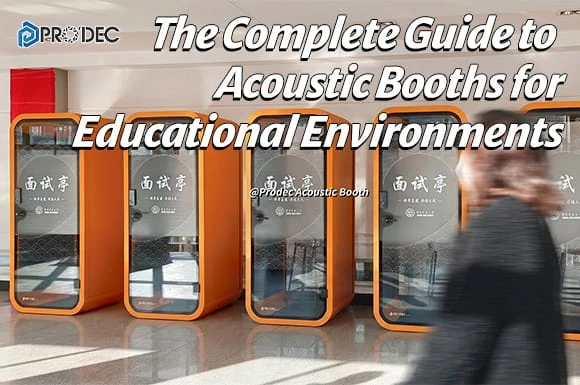
This is where soundproof acoustic booths transform educational environments. Unlike permanent classroom modifications, modular acoustic booths provide flexible, instant-access quiet spaces for studying, practicing, testing, and decompressing. From university libraries to music departments to exam centers, schools worldwide are discovering that strategic soundproof booth deployment dramatically improves student outcomes and campus well-being.
The Noise Problem in Modern Educational Settings
Understanding the Challenge
Educational institutions operate with conflicting spatial demands. Schools need open, collaborative spaces for group learning and social interaction. Simultaneously, students require quiet environments for focused study, skill practice, and stress management.
Traditional architecture attempts to balance these needs through classroom walls and designated "quiet zones." But modern pedagogical approaches emphasize flexibility—classrooms that transform for different learning styles, open campuses that encourage serendipitous collaboration, and multipurpose facilities serving diverse functions.
This flexibility comes at an acoustic cost. Students navigating between collaborative spaces and focus zones encounter constant background noise that research identifies as fundamentally detrimental to learning.
The Science: How Noise Impacts Academic Performance
Neurological research demonstrates clear mechanisms through which noise disrupts learning:
Memory Formation: The brain encodes new information through focused attention. Unexpected sounds trigger the orienting response—an automatic reflex that diverts attention to potential threats. In educational settings, frequent classroom noise, hallway disruptions, and campus sounds create constant micro-interruptions that prevent sustained attention necessary for memory consolidation.
Cognitive Load: Students learning complex material already strain their working memory. Adding acoustic interference increases cognitive load beyond optimal levels, reducing information retention and problem-solving capacity.
Stress Response: Chronic low-level noise activates the parasympathetic nervous system, elevating cortisol and adrenaline. Students studying or preparing for high-stakes exams in noisy environments experience measurable stress increases that impair test performance and well-being.
Speech Comprehension: For language learners, students with hearing challenges, and those studying in second languages, background noise creates particular difficulty. Research shows that signal-to-noise ratios critical for speech understanding are difficult to maintain in open educational spaces.
Studies documenting these effects are substantial. Research from educational psychology consistently shows that students studying in quiet environments outperform peers in noisy settings by meaningful margins—particularly on complex tasks requiring sustained focus or working memory.
Current Solutions Fall Short: Why Traditional Approaches Aren't Enough
The Limitations of Classroom Soundproofing
Schools seeking to address noise typically consider traditional soundproofing:
Cost and Disruption: Retrofitting existing classrooms with acoustic panels, replacing windows, or adding insulation costs $5,000-15,000 per room and requires weeks of construction. For institutions with limited budgets, this approach is simply unaffordable.
Inflexibility: Once soundproofed, a classroom remains dedicated to that function. Schools can't adjust as needs change—if enrollment shifts or pedagogical approaches evolve, the fixed installation becomes less valuable.
Limited Scope: Soundproofing classrooms doesn't address noise in libraries, hallways, practice spaces, or break areas where students also need acoustic control.
Maintenance: Aging acoustic treatments degrade, HVAC systems become louder, and facilities require ongoing maintenance without providing additional educational benefit.
The Open-Plan Office Paradox in Education
Some institutions adopt open-plan models—library commons, collaborative learning spaces, multipurpose halls—expecting students to find quiet when needed. In practice, these spaces remain noisy throughout operating hours. Students seeking concentration are left without viable options beyond leaving campus or accepting constant acoustic interference.
How Soundproof Acoustic Booths Address Educational Needs
Flexible, Instant-Access Quiet Spaces
Unlike fixed classrooms or traditional conference rooms, acoustic booths for schools provide on-demand quiet environments:
Walk-Up Availability: Students don't schedule study sessions days in advance. They need quiet space now—when preparing for exams, working through challenging material, or managing stress. Soundproof booths offer immediate access without booking friction.
Right-Sized Configuration: Educational institutions have diverse needs. Produc offers single-person booths perfect for focused individual study, two-person configurations for peer tutoring or partner projects, four-person setups for small group work, and six-person options for collaborative projects or language practice groups.
Rapid Deployment: Unlike construction projects, soundproof booths install in hours. Schools can start with pilot deployments in high-need areas—libraries or exam centers—then expand based on actual usage patterns and student feedback.
Superior Acoustic Environment
Professional soundproof booths deliver acoustic performance impossible in traditional spaces:
Sound Isolation: Prodec acoustic booths achieve Rw+Ctr 35dB(±5) sound reduction through 38mm double-layer aluminum honeycomb panels with high-density damping material. External campus noise becomes essentially inaudible, allowing complete focus.
Internal Clarity: Interior acoustic treatment (RT 0.25s ±0.1) eliminates echo and controls reverberation. Students experience natural speech clarity without the artificial, harsh acoustics of typical study spaces.
Privacy and Confidentiality: Students can study sensitive material, prepare for oral exams, conduct video interviews, or have confidential conversations with counselors knowing acoustic privacy is guaranteed.
Complete Student Experience Design
Educational soundproof booths aren't empty rooms—they're designed as functional study environments:
Lighting: 4000K daylight-temperature LED lighting (150LX) supports extended study sessions without eye strain. Light mimics natural illumination, supporting circadian rhythms and alertness.
Power and Connectivity: Integrated 100-240V outlets and USB charging ports support laptops, tablets, and devices. Students can study for hours without power concerns.
Ventilation: Dedicated ventilation systems with quiet fans circulate fresh air completely every three minutes, preventing stuffiness while maintaining acoustic isolation.
Interior Design: Light-colored acoustic materials and thoughtful spatial design maximize the perception of openness. Students report feeling focused rather than confined.
Comprehensive Applications Across Educational Environments
[Image suggestion: Multiple education settings with soundproof booths]
University Libraries: Creating Study Sanctuaries
The Challenge: Library noise has paradoxically increased as institutions modernize. Collaborative learning commons, coffee service areas, and group study zones create constant activity. Students seeking focused study find that traditional "quiet zones" aren't quiet enough.
Renmin University Case Study: Renmin University of China deployed soundproof study booths throughout their library system, creating dedicated quiet study spaces. Within the first semester, usage exceeded 95% during study peak times (finals preparation periods saw round-the-clock demand). Student satisfaction surveys showed marked improvement in studying effectiveness, with 87% of users reporting better focus compared to traditional study carrels.
The Solution: Distributing M-pods (two-person) and L-pods (four-person) throughout library floors creates flexibility. Students preparing for exams can access individual focus spaces. Peer tutoring groups find appropriate sized rooms. Graduate researchers conducting literature reviews have professional, distraction-free environments.
Music and Performance Education: Practice Spaces That Enable Excellence
The Challenge: Music students practicing instruments create noise that disrupts others and faces complaints from surrounding facilities. Soundproof practice rooms are expensive and limited—students often practice in dorm rooms, studios, or practice spaces miles from campus, reducing practice frequency and accessibility.
Huali College Case Study: Huali College installed six soundproof music practice booths in their music building, addressing decades-old complaints about practice noise. The immediate effect: practice room utilization increased 340% as students no longer faced noise complaints or studio unavailability. Student musicians reported practicing 60% more frequently. Within a semester, music students' performance assessments improved measurably. Faculty attributed improvements to increased practice accessibility and reduced scheduling friction.
The Solution: S-pods (single-person) and M-pods dedicated to music practice accommodate instruments while isolating sound completely. The 35dB sound reduction prevents practice sessions from disrupting adjacent facilities. Students practice whenever inspired, rather than fitting practice into limited available time slots.
Language Learning Centers: Immersion Without Isolation
The Challenge: Language students need spaces for pronunciation practice, conversation drills, and audio listening without self-consciousness. Open language labs don't provide acoustic privacy for practice. Students hesitate to speak aloud for fear of being overheard, limiting speaking practice essential for fluency development.
The Solution: Two-person acoustic booths create ideal language practice spaces. Students work with conversation partners or language lab systems with complete acoustic privacy. Teachers report that students practice more confidently knowing their mistakes and accent work won't be overheard. Pronunciation improvements accelerate when students practice without embarrassment.
Exam and Testing Centers: Professional Assessment Environments
The Challenge: Standardized testing and professional certifications require controlled environments. Universities conduct proctored exams, language proficiency tests, and professional licensing assessments in facilities that must minimize acoustic interference. Noise and potential acoustic distractions invalidate testing integrity.
The Solution: Single-person and two-person acoustic booths create professional examination environments. Each student has isolated acoustic space, eliminating the concern that external noise influenced test performance. Testing centers report improved student focus and confidence, resulting in fairer assessments. Some institutions use pods as "makeup test" spaces, providing flexible testing capacity without constructing permanent exam facilities.
Academic Support and Counseling: Private Conversation Spaces
The Challenge: Academic advisors, counselors, and tutors need private spaces for confidential discussions. Students struggling with coursework, emotional challenges, or personal circumstances deserve privacy when discussing sensitive topics. Many institutions lack adequate dedicated spaces.
The Solution: Two-person acoustic booths serve as flexible counseling and tutoring spaces. The modular design means they can be positioned in student centers, advising offices, or accessibility centers. Acoustic privacy ensures that confidential conversations remain truly private, enabling students to speak candidly about challenges.
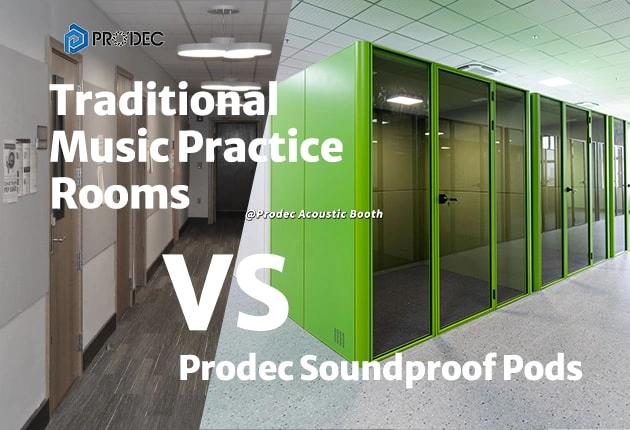
Comparison: Traditional Soundproofing vs. Soundproof Booths
[Image suggestion: Comparison infographic]
| Factor | Traditional Classroom Soundproofing | Modular Soundproof Booths |
|---|---|---|
| Installation Cost | $5,000-15,000 per room | $1,880-4,400 per booth |
| Implementation Time | 2-6 weeks of construction | Hours to 1-2 days |
| Campus Disruption | Significant (construction, noise) | Minimal (quick placement) |
| Flexibility | Permanent fixed installation | Relocatable based on needs |
| Space Utilization | Reduces available flexible space | Adds capacity without construction |
| Scalability | Expensive to expand to additional rooms | Add booths incrementally as budget allows |
| Acoustic Performance | Variable (depends on installation quality) | Engineered, consistent 35dB reduction |
| Maintenance | Ongoing (acoustic material degradation) | Minimal (integrated systems) |
| Adaptation to Change | Cannot adjust if needs evolve | Reposition or reconfigure easily |
| ROI Visibility | Difficult to measure specific benefits | Usage data and feedback easily tracked |
Step-by-Step Implementation Guide for Schools
Step 1: Assess Your Institution's Acoustic Needs
Survey students and faculty about acoustic challenges:
Where do students struggle to find quiet study space?
Which departments report noise-related complaints?
What activities specifically require quiet environments?
During which times is demand for quiet space highest?
Track utilization of existing "quiet zones" or study areas. If designated quiet spaces show high demand with insufficient capacity, acoustic booths address a real need.
Step 2: Identify High-Impact Pilot Locations
Start with one or two strategic locations where acoustic booths will address clear, documented needs:
Libraries: High student traffic, documented need for quiet study
Music departments: Noise complaints, limited practice facilities
Testing centers: Need for professional examination environments
Advising offices: Student confidentiality requirements
Pilot deployments allow you to gather usage data, gather student feedback, and demonstrate value before larger investments.
Step 3: Determine Required Booth Configurations
Match booth sizes to your institution's specific needs:
Heavy individual study demand: Prioritize S-pods (single-person)
Peer tutoring and group work: Focus on M-pods (two-person) and L-pods (four-person)
Music practice: Dedicate S-pods to instrument practice
Collaborative projects: Include some L-pods for small group work
Most institutions benefit from a mix—perhaps 40% single-person, 40% two-person, and 20% four-person configurations.
Step 4: Plan Strategic Placement
Position booths where students naturally congregate:
Libraries: Near main reading areas and study zones
Student centers: Visible, central locations with high foot traffic
Dormitory commons: For resident students needing quiet study space
Music buildings: Dedicated practice areas near lesson studios
Visibility drives usage. Booths hidden in corners or remote locations go underutilized even if they solve acoustic problems.
Step 5: Establish Clear Usage Protocols
Create simple guidelines that encourage rather than restrict usage:
Open Access: First-come-first-served, no advance booking (this is the key advantage)
Suggested Duration: 45-minute maximum during peak hours to ensure availability
Respectful Use: Emphasis on leaving booths clean and ready for the next student
No Penalty for Brief Use: Encourage even 5-minute focus sessions
Simple, permissive protocols maximize utilization and student satisfaction.
Step 6: Handle Technical Integration
Ensure booths integrate with your campus infrastructure:
Power connections: Simple electrical hookup by facilities
WiFi coverage: Verify strong network signal in booth locations
Accessibility: Ensure wheelchair-accessible models if needed
Booking systems (optional): Some institutions add simple digital availability displays
Professional installations handle these considerations, minimizing your technical burden.
Step 7: Launch with Student Communication
Build awareness and adoption:
Demonstration period: Allow students to explore booths informally before official launch
Clear signage: Simple "Available/In Use" indicators help students understand immediately
Word-of-mouth: Let early adopters share positive experiences—organic enthusiasm drives adoption
Feedback channels: Create simple ways for students to report issues or suggest improvements
Step 8: Monitor Usage and Gather Feedback
Track actual patterns to guide expansion:
Usage observation: Note which booths and times see highest demand
Student surveys: Quarterly check-ins about whether booths meet needs
Grade and performance correlation (optional): Some institutions track whether heavy booth users see academic improvement
Adjust configuration: Be willing to move booths or add sizes based on actual patterns
Step 9: Document and Share Results
Create case documentation that justifies expansion:
Usage statistics: Demonstrate high utilization rates
Student testimonials: Capture how booths improved focus, grades, or well-being
Cost-benefit analysis: Show ROI compared to traditional soundproofing
Space efficiency: Demonstrate how booths add capacity without construction
Step 10: Expand Based on Success
Use pilot data to justify larger deployments:
High utilization (>80%): Add more booths of the same configuration in similar locations
Unmet demand: Identify departments or student populations still lacking adequate quiet space
Budget flexibility: Prodec booths' affordability ($1,880-4,400) makes expansion feasible for most institutions
Real Student Experiences: What Users Report
Focused Study Sessions Become Possible
Chen, Graduate Student at Renmin University: "Before our library installed study booths, I had nowhere quiet to prepare for my comprehensive exams. The library commons were too social, and my apartment had roommates. Now I can book a booth for intense, distraction-free study sessions. It's honestly transformed how I prepare. My exam scores improved noticeably."
Practice That Actually Happens
Marcus, Music Performance Student at Huali College: "We used to schedule practice rooms weeks in advance, and if you missed your slot, you were out of luck. With the soundproof booths, I can practice whenever the inspiration strikes. I went from practicing 3-4 times weekly to daily. My playing has improved dramatically, and honestly, my mental health is better too—practicing is how I manage stress."
Confidence in High-Stakes Moments
Priya, Graduate Test Taker: "Taking my professional certification exam in an acoustic booth made me feel completely focused. I wasn't distracted by campus noise, hallway activity, or worrying whether external sounds would affect my test. The isolation actually reduced test anxiety."
Language Learning Breakthrough
João, English Language Center Student: "Practicing English conversation in the booth gave me confidence. No one could hear my accent or mistakes, so I actually spoke aloud, repeated phrases, and practiced natural speech patterns. My speaking improved rapidly because I could practice without embarrassment."
FAQ: Soundproof Booths in Educational Settings
How effective are soundproof booths at blocking external noise?
Professional educational soundproof booths achieve Rw+Ctr 35dB(±5) sound reduction—meaning external noise is reduced to whisper level or quieter. In practical terms, students inside focus completely on their work while campus noise, hallway activity, and adjacent classrooms become essentially inaudible. This acoustic isolation is consistent and reliable, not dependent on how the room is used.
Can students with sensory sensitivities use these booths safely?
Yes. The compact size, controlled lighting, and quiet ventilation systems actually benefit students with sensory processing differences. Many students with ADHD, autism spectrum conditions, or anxiety report that the contained environment with minimal external stimulation helps them focus. As always, individual needs vary—encourage interested students to try a booth to see if it works for them.
What about students who feel claustrophobic in small spaces?
Professional booth design minimizes claustrophobia through glass panels providing visual connection to the larger space, adequate LED lighting, continuous quiet air ventilation, and interior materials in light colors that maximize perceived spaciousness. Most students report feeling focused rather than confined. Students with specific spatial anxiety can speak with counseling centers about whether booths suit their needs.
How does the cost compare to building traditional study rooms?
Traditional study room construction costs $5,000-15,000 per room, requires 2-6 weeks of disruption, and creates permanently fixed space. Soundproof booths cost $1,880-4,400 per unit, install in hours, and relocate easily if needs change. For a school with $50,000 budget, they could build 3-4 traditional rooms or deploy 12-15 versatile acoustic booths serving more students with greater flexibility.
Are these booths only for studying, or can they serve other educational functions?
Acoustic booths serve multiple functions: individual study focus, pair tutoring sessions, language practice, music instrument practice, test taking, academic advising, counseling sessions, video recording for online courses, and confidential conversations. The flexibility is one of their key advantages over fixed-purpose classrooms.
How do schools handle maintenance and cleanliness?
Maintenance is minimal. Most schools establish simple end-of-day checks—facilities staff confirm booths are clean and functioning. The durable aluminum and acoustic materials are designed for institutional use and require no special maintenance. High-use booths might need professional cleaning monthly, similar to office equipment.
Can booths be customized with university branding or color?
Yes. Soundproof booths can incorporate institutional colors, logos, or designs. Some universities feature their school colors or seal on booth exteriors, creating campus identity while maintaining acoustic performance. Custom options exist without compromising acoustic functionality.
Conclusion: Investing in Student Success and Well-Being
The evidence is clear: noise disrupts learning, impairs academic performance, and increases student stress. Yet most educational institutions lack affordable solutions for creating quiet study environments at scale.
Soundproof acoustic booths address this gap fundamentally. By providing instant-access, high-quality quiet spaces, institutions support student focus, well-being, and academic achievement. Case studies from Renmin University and Huali College demonstrate measurable improvements: enhanced study effectiveness, increased music practice accessibility, and student satisfaction.
More importantly, soundproof booths represent an achievable investment. At $1,880-4,400 per unit with installation in hours, schools can deploy meaningful capacity without construction budgets or multi-year timelines. Pilot deployments generate data justifying expansion, allowing institutions to scale based on actual student demand and measured benefits.
As educational institutions evolve to support diverse learning styles and student well-being, acoustic infrastructure becomes as essential as classroom technology or library resources. Soundproof booths aren't a luxury—they're a practical, affordable investment in student success.
The question isn't whether schools need quiet study environments. They do. The question is whether institutions will provide them through expensive, inflexible construction projects or through strategic deployment of professional acoustic booths designed specifically for educational environments.
For universities and schools serious about supporting student focus, academic performance, and well-being, the answer is clear.
Ready to transform your school's acoustic environment?
Explore Prodec Acoustic Booth educational solutions or contact us to discuss configurations tailored to your institution's specific needs.